ASTM E2018-24 Aligned
Property Condition Assessments for Arizona Commercial Real Estate
Understand the building. Identify material physical deficiencies. Plan with better information. PCAs for buyers, investors, lenders, owners and asset managers throughout Phoenix and Arizona.
Quick answer: A Property Condition Assessment (PCA) evaluates the physical condition of commercial real estate through a walk-through survey, document review, interviews and research, producing a Property Condition Report (PCR) that identifies material physical deficiencies and, when scoped, opinions of probable costs. Patterson 360 can scope PCAs aligned with ASTM E2018-24.
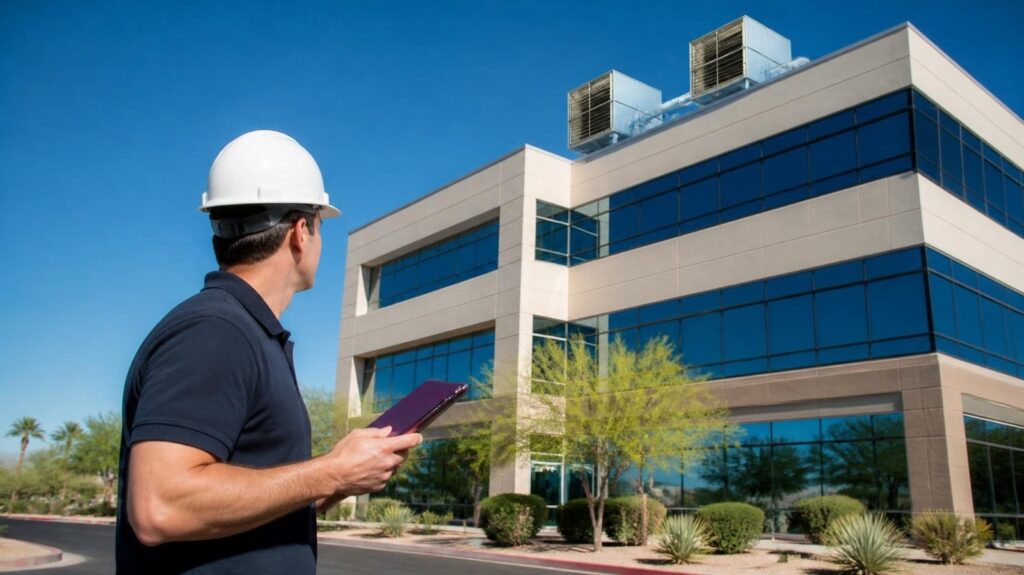
More Than a Building Inspection
A PCA is typically requested when a lender, investor or purchase agreement needs a more formally defined due-diligence process than a general commercial inspection.
A PCA is a point-in-time assessment of observable conditions and does not replace every specialty evaluation a property may need.
A PCA Can Include
- Property research and document review
- Interviews with knowledgeable property representatives
- Walk-through survey
- Identification of material physical deficiencies
- Evaluation of major systems and site improvements
- Photographic documentation
- Opinions of probable costs (when scoped)
- A formal Property Condition Report
What a PCA Evaluates
Scope is set per property. Readily accessible systems may include:
Site & Grounds
Parking, drives, sidewalks, drainage, grading, retaining elements and lighting.
Structural Systems
Foundations, framing, columns and visible distress. Not an engineering analysis.
Building Envelope
Walls, stucco, masonry, cladding, windows, doors, sealants and flashings.
Roofing
Membranes, drainage, flashings, penetrations and parapets, with drone support when appropriate.
HVAC & Mechanical
Packaged rooftop units, split systems, air handlers and visible ductwork.
Electrical & Plumbing
Service equipment, panels, supply and drain piping, fixtures and water heaters.
Interior Areas
Common areas, tenant spaces and service areas per sampling plan.
Fire & Life Safety
Visible components observed where in scope; not a code certification.
Vertical Transportation
Elevator information reviewed or observed when applicable.
The Patterson 360 PCA Process
01
Project Discovery
Property details, deadline, purpose and lender or investor requirements.
02
Scope Development
Scope defined before fieldwork, including ASTM alignment when requested.
03
Document Review
Maintenance records, prior reports, plans, warranties and capital information.
04
Property Walk-Through
Accessible areas and systems documented with photos.
05
Analysis & Reporting
Findings organized into a professional Property Condition Report.
06
Client Review
Discuss findings and questions with the assessment team.
PCA vs. Commercial Property Inspection
| Property Condition Assessment | Commercial Inspection | |
|---|---|---|
| Process | Formally structured due diligence | Flexible, based on client needs |
| Typical users | Investors, lenders, institutional stakeholders | Buyers, owners, tenants |
| Standard | May follow ASTM E2018-24 | Scope set by agreement |
| Research | Document review and interviews | Primarily field-condition focused |
| Deliverable | Property Condition Report (PCR) | Commercial inspection report |
| Cost opinions | Included when scoped | Not necessarily included |
Not sure which you need? If a lender, investor, attorney or contract requires a PCA, PCR or ASTM E2018 assessment, tell us when requesting your proposal. Otherwise, a commercial property inspection may be sufficient.
When to Order a PCA
- Purchasing or underwriting a commercial property
- A lender requires physical-condition due diligence
- Acquiring multiple assets or a portfolio
- Evaluating significant deferred maintenance
- Building a capital improvement strategy
- Entering a substantial commercial lease
- Refinancing or recapitalizing
Include With Your Proposal Request
- Property address, type and square footage
- Number of buildings and year built
- Occupancy and due-diligence deadline
- Intended use of the PCA and lender requirements
- Required ASTM standard or scope
- Whether cost opinions or a reserve period are needed
- Known concerns and available documents
Frequently Asked Questions
What is a Property Condition Assessment?
A Property Condition Assessment (PCA) is a structured evaluation of a commercial property’s physical condition. It may include document review, interviews, research, a walk-through survey, evaluation of major building systems, identification of material physical deficiencies and a Property Condition Report.
What is ASTM E2018-24?
ASTM E2018-24 is the current ASTM Standard Guide for Property Condition Assessments: Baseline Property Condition Assessment Process. It provides a framework for evaluating commercial real estate using a walk-through survey and supporting research.
What is a Property Condition Report?
A Property Condition Report (PCR) is the written work product of a PCA. Depending on scope, it documents material physical deficiencies, observations, photographs, recommendations and opinions of probable costs.
Does a PCA include repair cost estimates?
An ASTM baseline PCA includes opinions of costs for suggested remedies of observed physical deficiencies. Cost-analysis requirements are confirmed in the project scope before the assessment begins.
Do lenders require Property Condition Assessments?
Some lenders require a PCA or similar physical-condition assessment for commercial real estate underwriting. Requirements vary, so share the lender’s scope before scheduling.
Does a PCA include an ADA compliance survey?
Not automatically. ASTM treats an ADA accessibility survey as an additional consideration, so accessibility scope should be confirmed before engagement.
How much does a Property Condition Assessment cost?
Pricing depends on size, number of buildings, age, complexity, location, required standard, reporting, specialists, cost-estimating needs and deadline. Patterson 360 provides project-specific proposals.
How long does a PCA take?
Timing depends on building count, square footage, property type, occupancy, access, documentation, scope and reporting requirements. A schedule is set during proposal development.
Know the Property Before You Commit Capital
We’ll develop a PCA scope around your building and project requirements. Call/text 623-303-9344 or email office@patterson360.com.